

SCS – Stevia Control Standard
PLC programming
We have been programming PLCs for over 20 years. Experience has allowed us to develop our own proprietary standard, which contributes to faster and more efficient implementation of material transport system control projects.
SCS is a library containing PLC blocks and off-the-shelf ATVISE SCADA components. The blocks are prepared in such a way as to make the programming of new systems as simple as possible, and for each block or component to perform a specific, tested task. The standard also includes off-the-shelf mechanisms to integrate the PLC programme with Emulate 3D providing virtual commissioning and system testing.
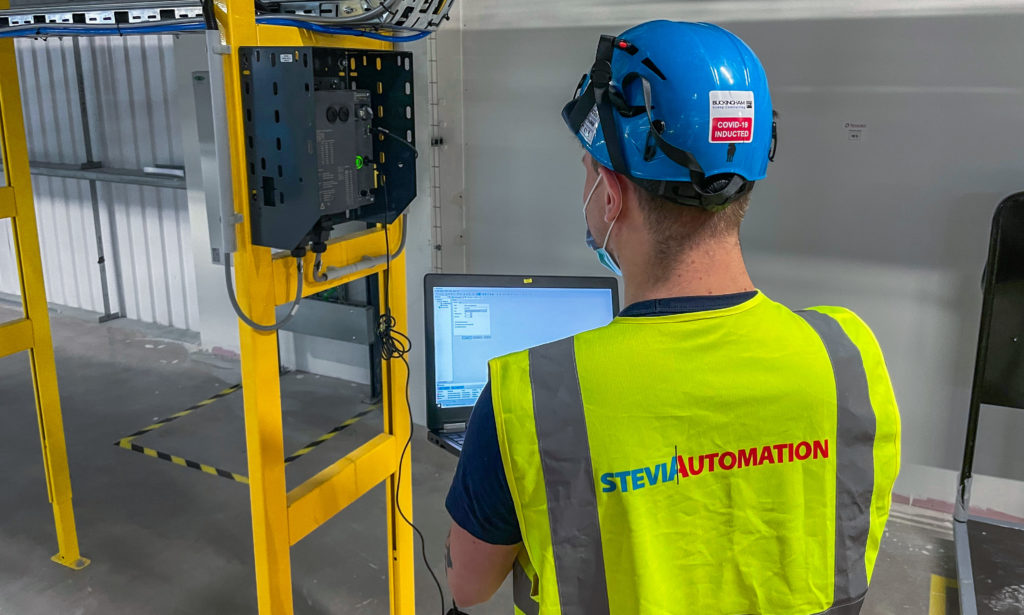
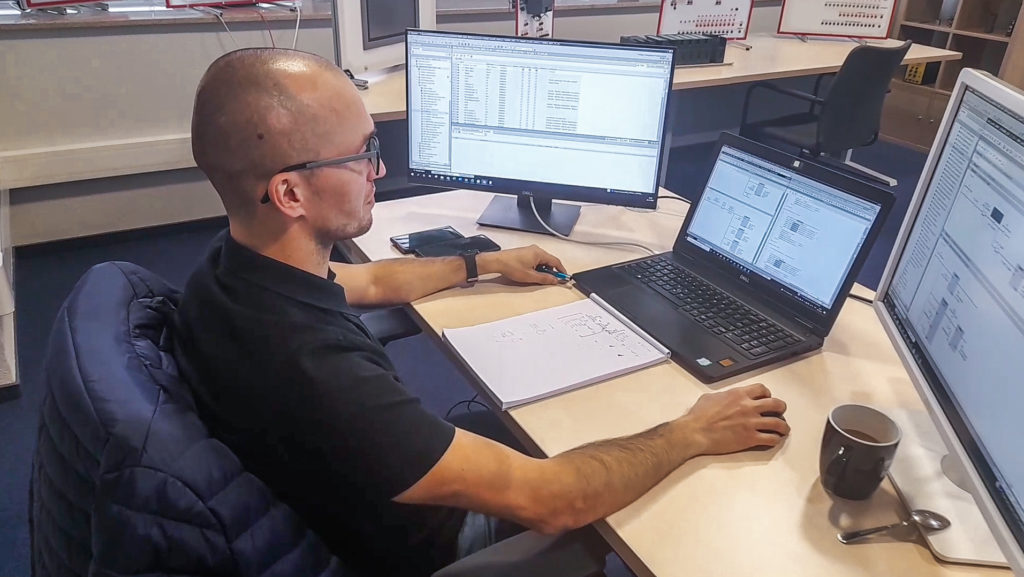
The SCS has been used in a number of projects requiring high product transfer rates. The excellent knowledge of the standard and the numerous applications confirm that it is suitable for use in the intralogistics industry.
Programming intralogistics systems enables the optimization and improvement of product and information flow processes within a company. Industrial programming of equipment and internal transport systems contributes to increased efficiency, reduced operational costs, and minimized risk of errors in logistics processes.
Advantages of using our SCS standard:

Tested programme blocks

Reducing implementation time

Cost reduction

Timely project implementation
Programming of intralogistics systems and industrial machines
We program both advanced and large-scale intralogistics systems as well as standalone machines – our software is capable of managing hundreds of conveyors. We also program advanced equipment such as sorters, vision systems, and industrial robots. We ensure full traceability of every product and guarantee that each transported load reaches its intended destination.
Years of experience in programming industrial PLC controllers and machines, combined with project execution worldwide, have enabled our engineers to adapt software to virtually any type of equipment. Most of our projects are based on Siemens controllers, but we are also experienced with other platforms such as Allen-Bradley.

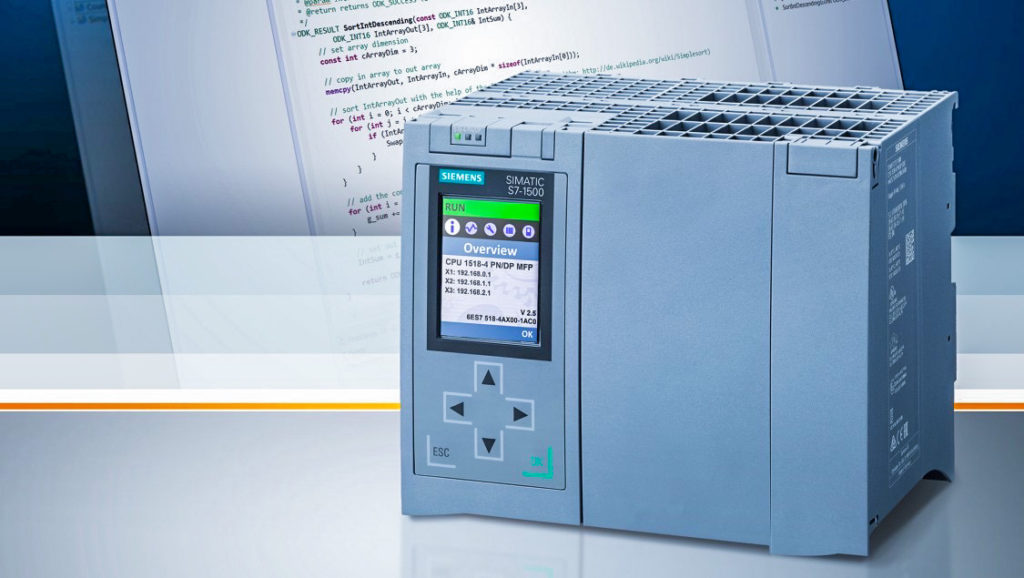
Programming based on our partners’ standards
When working with our partners, we often follow their machine and control system programming standards. At the beginning of each collaboration, we familiarize ourselves with the given standard and then proceed to the system development phase. This is our standard approach, through which we have successfully delivered many projects.